





Coteaux du Sézannais and Petit Morin circuit
Champagne tourist route
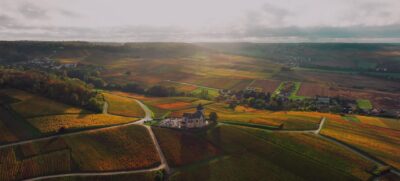
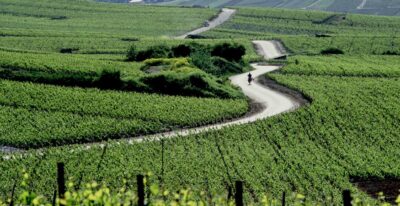
Between bocage, marshes and vineyards, this 110 km itinerary winds its way through the Coteaux du Sézannais and Petit Morin, discovering an extremely rich wine-growing, historical, architectural and natural heritage.
CHAMPAGNE TOURIST ROUTE
CIRCUIT DEPARTING FROM BERGERES-LES-VERTUS
The route starts in Bergères-lès-Vertus, with its many interesting historical sites.
Ce territoire a également été témoin d’affrontements pendant la première guerre mondiale. Pour cette raison, un imposant monument commémoratif national, en souvenir des soldats de la première bataille de la Marne, ainsi qu’un musée, ont été érigés à Mondement.
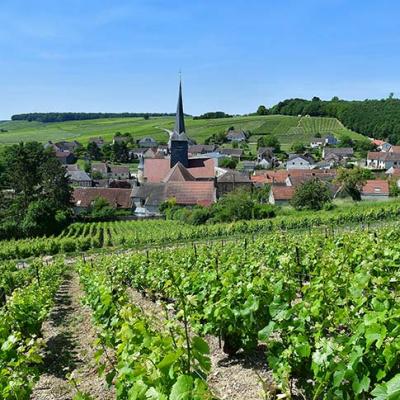
Dirigez-vous vers Coligny en longeant le Mont Aimé (240 m). Vous pourrez y observer l’aiguayoir, une curiosité du patrimoine colignois : un grand bassin destiné au bain des chevaux qui pouvaient s’y rafraîchir, avec de l’eau jusqu’au ventre. Il a été construit à l’époque des grandes foires de Coligny, début 1800, quand les attelages empruntant la “voie du sel” faisaient halte dans la commune.
Étrechy, Soulières, Givry-lès-Loisy, Loisy-en-Brie, Vert-Toulon, Beaunay: one village follows another, and the landscape changes constantly, between vineyards, meadows, woods and wetlands. The tour takes in the Coteaux du Petit Morin, named after the river that flows through it.
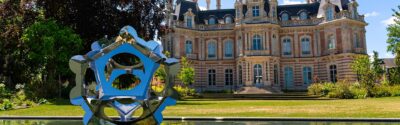
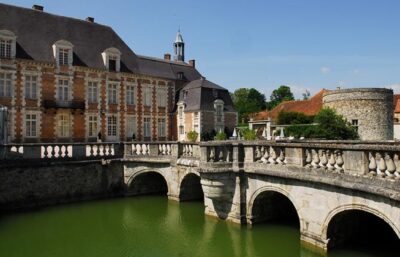
À Étoges, le Château ne manque pas de superbe. Classé monument historique, il fut le relais des Rois de France sur la route de l’Est. Il est entouré de douves en eau et d’un parc de 20 hectares dont les nombreux bassins et jets d’eau firent l’étonnement de Louis XIV !
After a detour via Fèrebrianges, you arrive at Champaubert. A column commemorating the Napoleonic victories of February 10, 1814 at the battles of Champaubert, Marchais and Montmirail has been erected at the crossroads.
Head for Bannay, via Baye. The village is home to the Dolmen du Reclus. In fact, it’s a covered walkway erected between 3500 BC and 2900 BC as a collective burial site. This alley, which was probably originally longer than it is today, formed a veritable tumulus. The Vallée du Petit Morin is the only part of the Marne region to feature Neolithic monuments such as dolmens, menhirs and hypogeums.
Revenez à Baye, en passant par Talus-Saint-Prix, où vous attend le Château de Baye et sa chapelle gothique. Classée au titre des Monuments Historiques, la chapelle Saint-Alpin est un trésor du patrimoine religieux champenois. Vous pouvez admirer de plus près ses 5 splendides vitraux lors des Journées Européennes du Patrimoine.
Did you know?
The Château de Baye, which became a Foyer de Charité in 1960, welcomes you for spiritual retreats.
Continue on to Coizard-Joches, via Congy. Coizard-Joches also conceals a necropolis dating back thousands of years. The Grotte du Razet, as it’s also known, contains 37 hypogea, funerary monuments dug into the chalk on the hillside. The whole complex is a listed monument.
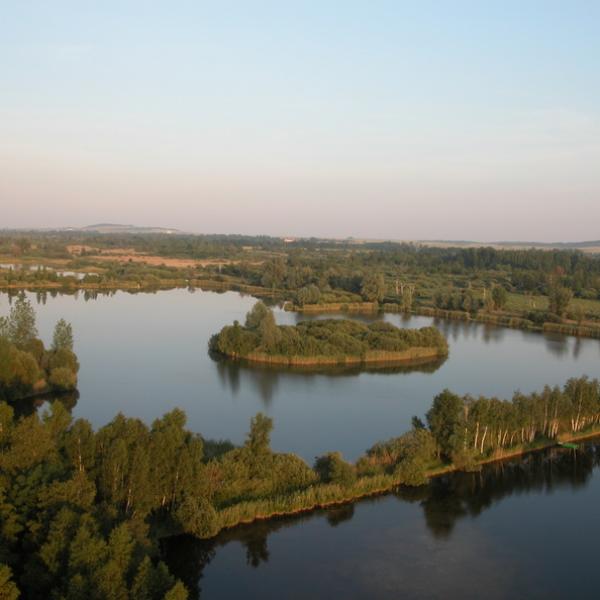
You’re in the heart of the Marais de Saint-Gond, a vast wetland area covering some 1700 hectares in the Petit Morin valley. All the ingredients for a breath of nature and greenery!
The Marais de Saint-Gond, a Natura 2000 site, is the largest alkaline peat bog in the Marne. This natural area is home to exceptional biodiversity and offers a fascinating spectacle all year round. Two species of its flora are protected at national level: the superb carnation and the great fluke.
Longez le Petit Morin via Courjeonnet puis Villevenard, avant de le traverser pour rejoindre Reuves. La Réserve naturelle régionale du Marais de Reuves s’inscrit au cœur des Marais de Saint-Gond. De nombreuses espèces végétales et animales remarquables trouvent refuge dans ce marais fragile. Pour découvrir la réserve, suivez La Rainette, un sentier aménagé et balisé de 2 km ouvert du 1er avril au 30 août (pensez à mettre des bottes !).
Quittez peu à peu les Coteaux du Petit Morin pour ceux du Sézannais en poursuivant votre route vers Oyes, Allemant puis Broyes.
Vous arrivez à Sézanne, ancienne cité médiévale, classée Petite cité de caractère®. Si vous êtes amateurs de belles pierres, une balade s’impose dans ses ruelles pavées pleines de charme. Au cœur du vieux Sézanne, les mails tracent sur plus d’un kilomètre une ceinture arborée. Ce sont les anciennes fortifications du Moyen-Âge qui ont été comblées à la fin du XVIIIème siècle, et plantées de rangées de tilleuls. Prenez aussi le temps d’admirer le Couvent des Récollets, petit bijou d’architecture.
Did you know?
The chapel is the setting for several paintings by Brother Luc, a 17th-century monk and painter who was a pupil of Poussin and Simon Vouet, and who, before entering religion, was called … Claude François!
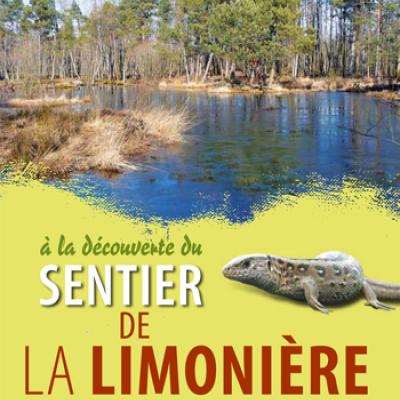
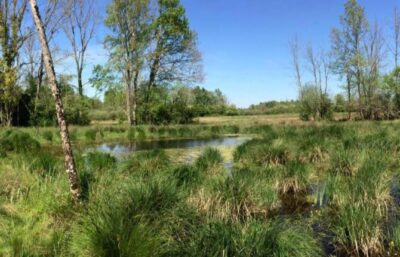
Take the road back to Vindey. On the way, don’t hesitate to stop and explore the surprising Sentier de la Limonière linking Sézanne to Vindey. This Natura 2000-listed site boasts moorland and an exceptional density of ponds.
did you know?
A rare and protected species has found refuge in the ponds of La Limonière: the Crested Newt. The male has a remarkable dorsal crest that makes him look like a small dragon. Harmless, the amphibian rarely measures more than 16 cm.

Après Saudoy, la route file vers Barbonne-Fayel, situé au bord de la Forêt de la Traconne. Au cœur de 4500 hectares boisés, le Carrefour de l’Étoile forme le point de départ de 8 circuits de randonnée. Au centre se dresse une colonne en grès érigée en 1726.
In the next village, Fontaine-Denis-Nuisy, you can discover the Dolmen de Nuisyknown as “Les Pierres de Sainte-Geneviève”, planted in the heart of the fields. This listed monument marks the boundary of a large sepulchral chamber. Unlike the one at Le Reclus, this is a real dolmen.
La Celle-sous-Chantemerle, Chantemerle, Bethon, then Montgenost, the Champagne Tourist Route continues from village to village towards the south-western end of the Coteaux Sézannais.
Your itinerary ends in Villenauxe-la-Grande, famous for its ceramics and earthenware. The old houses of the old town and the church of Saint-Pierre et Saint-Paul, with its majestic choir, will bring your tour to a pleasant close!



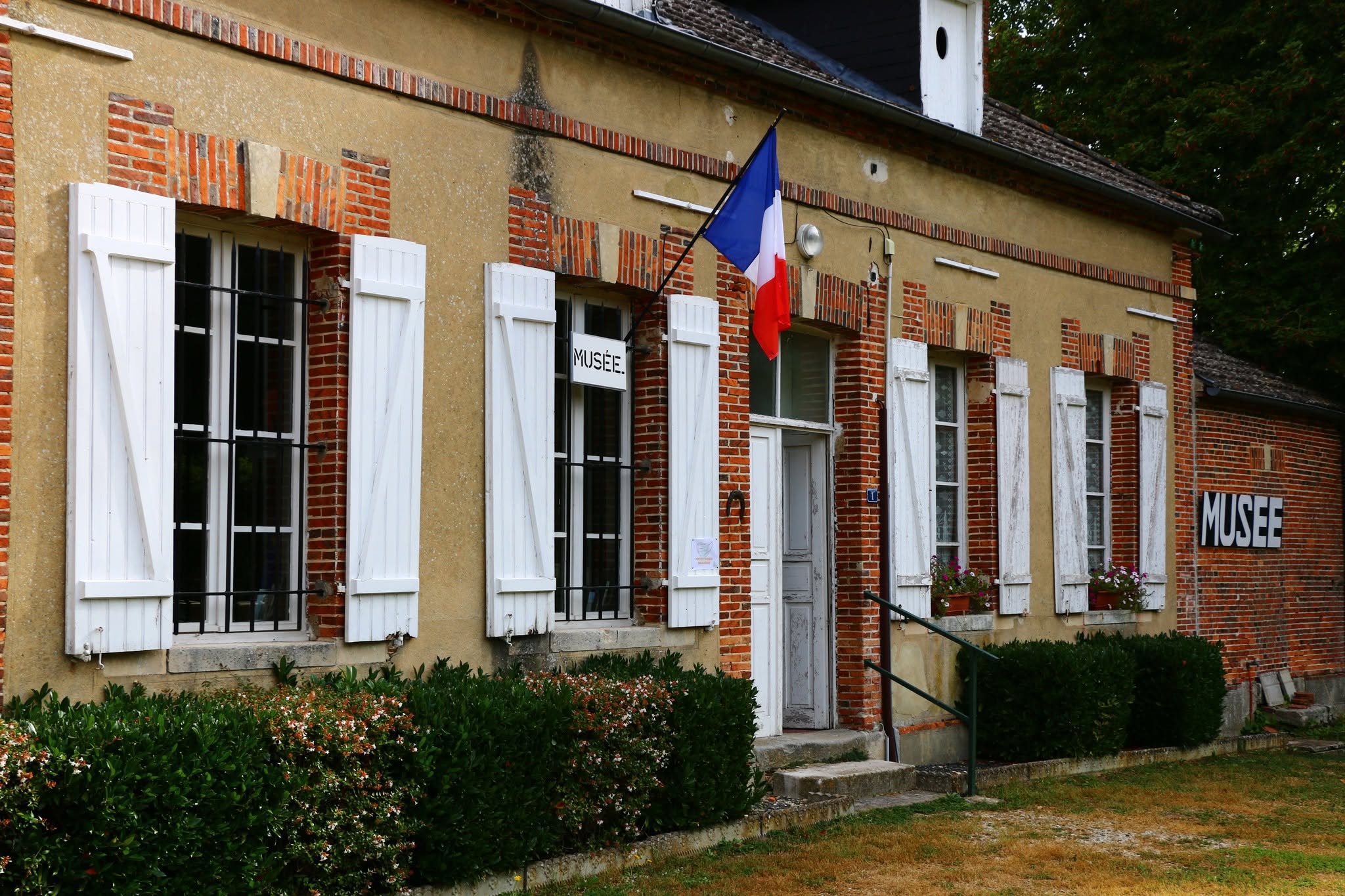
Musée de la Victoire de la Marne
Mondement-Montgivroux
The monument is a 35-metre high monolith erected to commemorate the first victory of the Marne in…